by Gary Gardiner | Apr 30, 2013

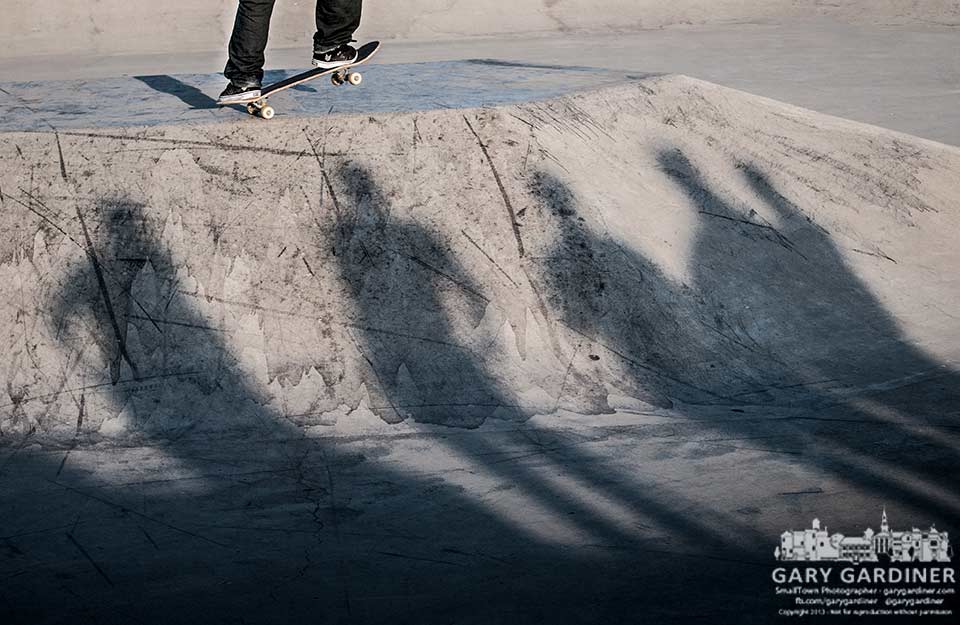
Skateboarder enjoys afternoon with friends – My Final Photo for April 30, 2013
Earlier I watched a conversation on CreativeLive with Joey L and Chase Jarvis who answered a viewer’s question who wondered what they thought was the most disruptive aspect of modern photography.
Jarvis said context was having the most effect on photography echoing a previous CreativeLive conversation with Robert Scoble about technology.
The broad idea is the viewer is no longer interested in just viewing the photo. More people are now able to understand and practice the science aspect of creating photographs and are more interested in the complete context of how the photo was created.
Skateboarder’s friends watch during afternoon at park
Context expands interest in the photo beyond a visual interpretation. Additional information helps the viewer better understand not only the photograph and its purpose. It also helps the viewer, if a photographer, to make their work better.
When properly done, context increases a photo’s value with a new set of facts and ideas that contribute to the creative process.
My photo for the day is an example of contextual composition where added elements other than the subject helps tell the story of the moment or creates a better dialogue about the subject.
This skater’s expression and position, without the shadows, are an interesting subject.With a slight crop it would stand as a single frame.
The row of trailing shadows adds context. It shows a group of friends watching his performance during an afternoon skate session at the local park.
I prefer the top photo because it shows the skateboarder’s joy. The bottom photo is graphically more interesting with the shapes and tones becoming primary to the composition.
Both photos without the contextual shadows would be pleasing and great photos of skateboarder action. Placing the shadows of the friends into the frame adds the element of their observation and group dynamics.
The shadows by themselves are interesting but are not subjects for a photo. Including them as contextual elements elevates an ordinary action photo to a more interesting storytelling photo of an afternoon with friends.
by Gary Gardiner | Apr 29, 2013
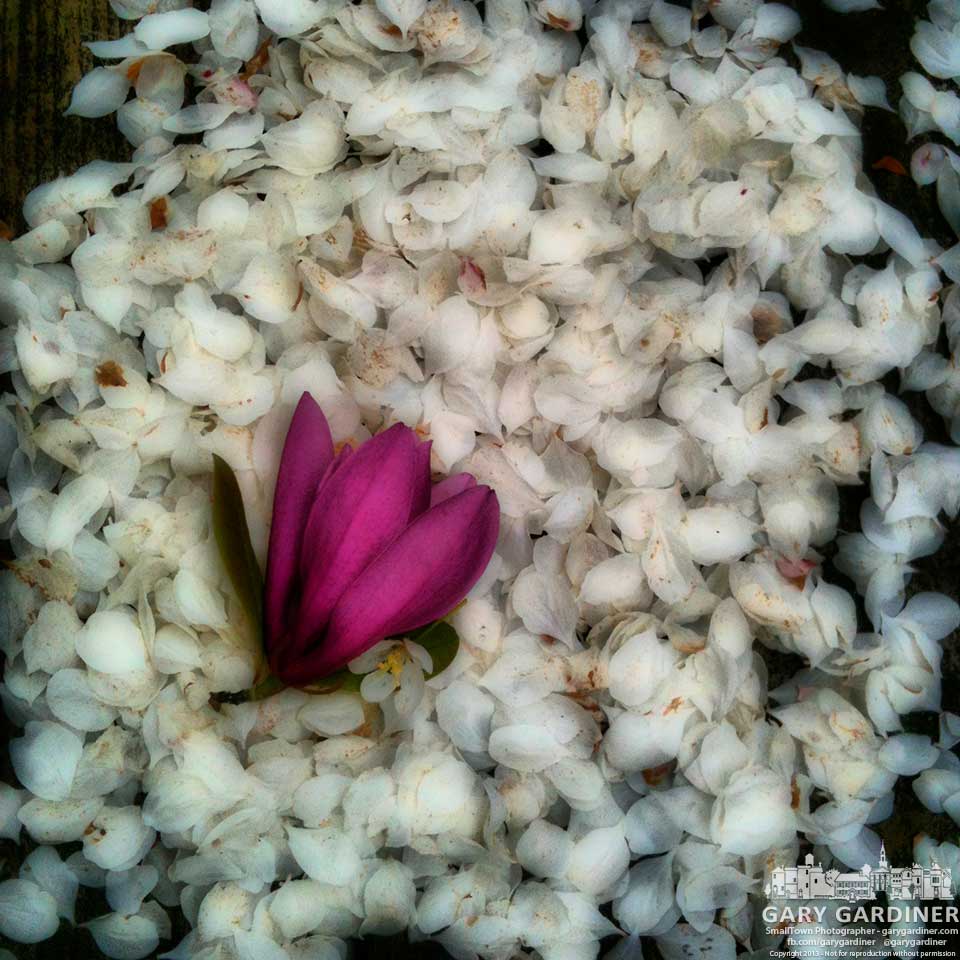
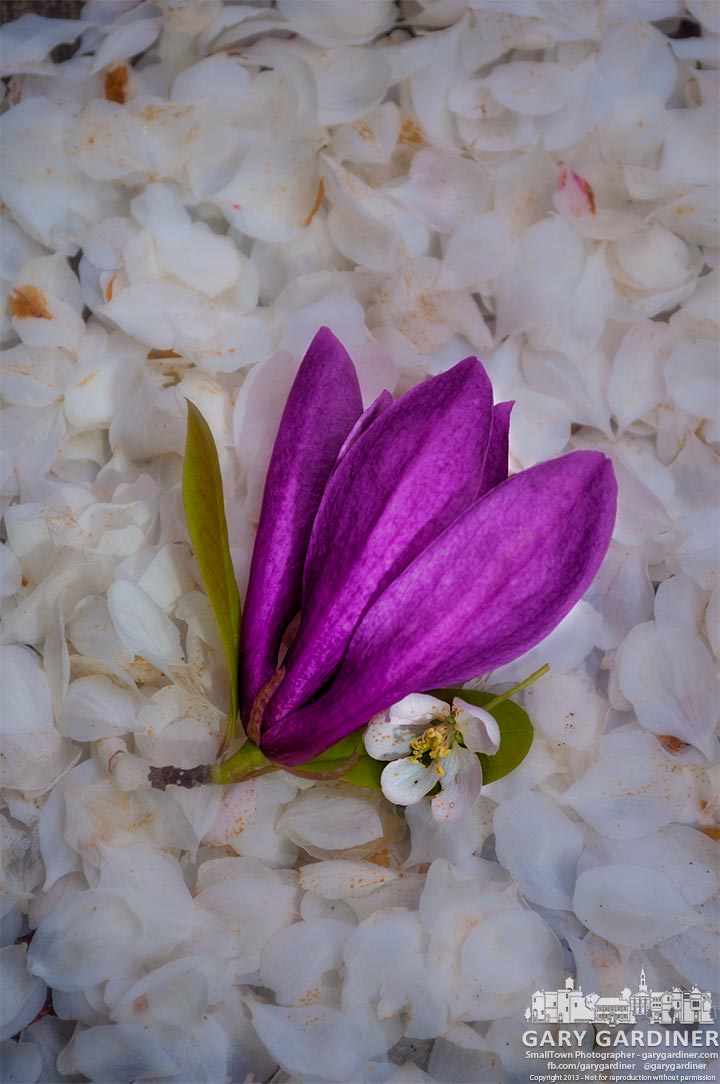
Japanese Magnolia and crabapple petals. My Final Photo for April 29, 2013
It didn’t help that the weather on a Sunday was rainy and chilly. There were few people outdoors enjoying themselves, and that complicated my photo bike trek. Complicated it so much that the best photo of the day came from my iPhone from the benches beneath the crabapple tree in my front yard.
I’ve many photos from that tree. With kids climbing, hanging, running around, standing in their Easter finery under a shower of petals, and studies on pistils and stamens.
There are usually about a week when it is in full bloom. Sometimes that is cut short by a wind storm that prematurely strips away the blossoms and sometimes the leaves.
The tree is well past its prime. I’ve trimmed it many times hoping to keep it compact. It doesn’t seem to work. It grew a lot more after the larger silver maple trees in the front yard were removed when they became old and began to split and decay.
 I told my family that the only thing smart about my photography on Sunday was my phone.
As it turns out, it’s not a bad photo. It’s just from an iPhone.
Editors Note: I did shoot it with my DSLR.
by Gary Gardiner | Apr 28, 2013

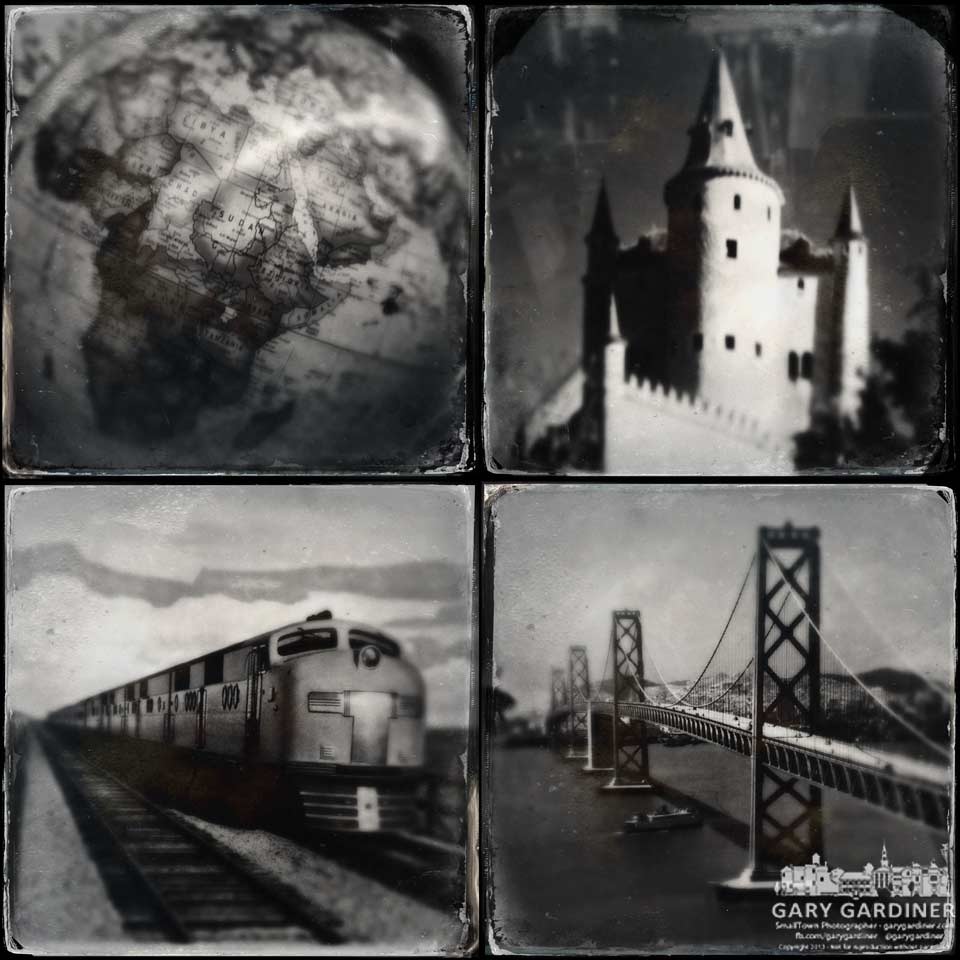
iPhone Diptic from A Gal Named Cinda Lou – My Final Photo for April 28, 2013
Sunday was a very relaxing day with little to do but sit with family and talk with friends. Did take a few moments to lay at Cinda Lou’s in Uptown Westerville with the Hipstamatic Tintype Film Pak and the Diptic app.
by Gary Gardiner | Apr 27, 2013
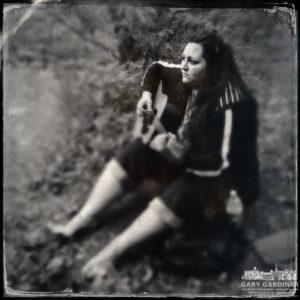
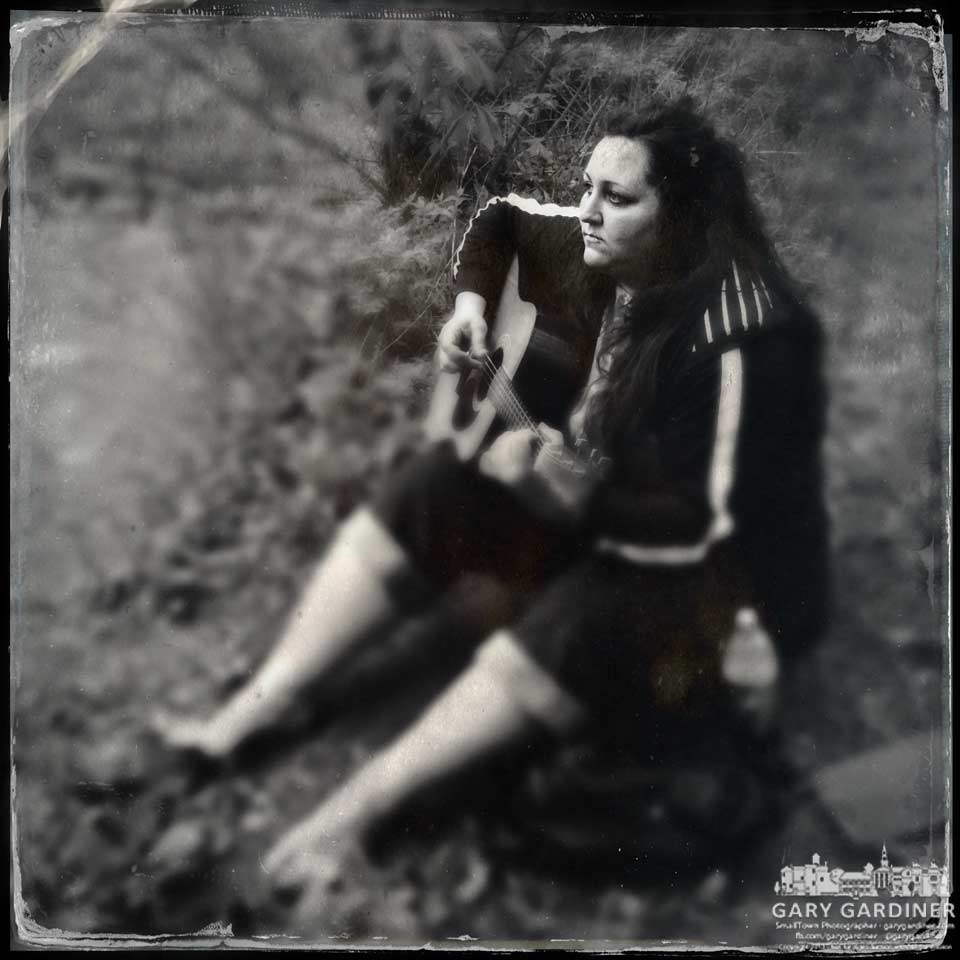
Quietly playing her guitar at the end of a long path behind the cemetery. My Final Photo for April 27, 2013
Although every day is different, most days are a continuation of the day before. That’s not necessarily a bad thing. It’s a foundation on which to build new experiences, consider changes, and gain new knowledge about the previous day’s lessons.
For a photographer, especially one that shoots as many features as I do, it is an opportunity to explore. The exploration can be as narrow as choosing to use a longer telephoto or as expansive as buying new gear to add to the physical tool arsenal.
The more difficult choice is to make minor changes. To choose to explore the possibilities of what you have already mastered. Reconsidering the truths you have learned can strengthen your photographs or make you consider the possibility that all you have learned is rules set and described by others. Rules that have no reality in your work or inhibit you from discovering new branches of your talent.
Sometimes the experience of forcing yourself to move beyond exhaustion may help you discover creative tools and ideas that make your photographs better. The exhaustion may be physical. It may be emotional or creative where ideas get blanketed with fatigue that smothers any attempt to move beyond what you’ve already accomplished.
Marketers have done a great job of selling photographers on the idea that the best way to express creativity is to buy new equipment such as faster lenses, higher megapixel cameras, remotely controlled strobes, and gear that is specific to a photography technique they may never encounter.
What’s more important for a good photographer is to admit that your talents may never be as good as what is promised by all the ads, how-to videos, step-by-step instructions, or latest ebooks.
It’s more important, if you want to become a better photographer, is to look again at the work you’ve done with the gear you have and ask yourself if you are satisfied with the result. If you are like me you will discover that nothing, not even the best work you think you have done, is perfection.
The most difficult part of answering that discovery is knowing that it isn’t the equipment. It isn’t the latest camera or lens, or software, that will make your photography better. It’s questioning your results and asking if your creative process is vibrant. Is it challenging? Does it force you to study your subject beyond the obvious? Does it compel you to question the desire to be a photographer?
Are you creative or do you think you need something more than desire?
by Gary Gardiner | Apr 26, 2013
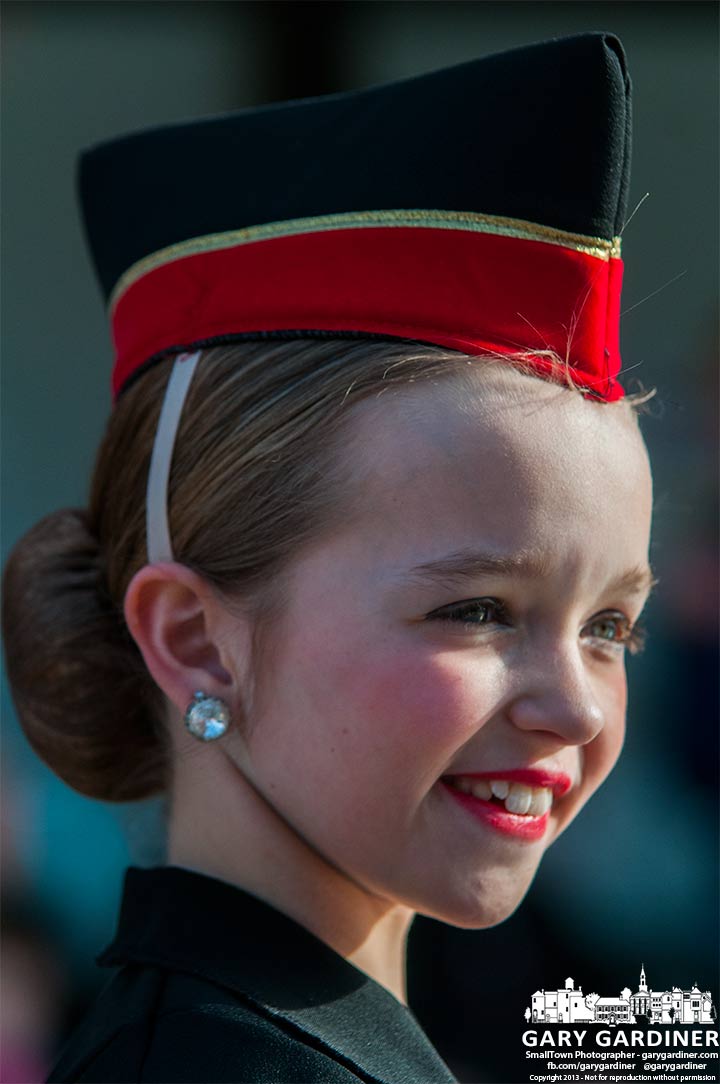
Generations dancer before solo performance – My Final Photo for April 26, 2013
The Fourth Friday in April always begins the once a month summer celebrations in Uptown. I’m almost always there as it continually offers an old news photographer the opportunity for feature photos.
Feature photos are typically those photos that don’t need an explanation or caption. They speak for themselves not needing anything to help explain the moment. A caption is only useful only to expand on the obvious and to answer one of the WWWWWH questions.
Feature photos typically have very strong central subjects, good lighting, and are at the peak of action. A combination of these elements intensifies the impact so that the photo usually stands out on the page. It becomes the dominant element on the page around which other stories and ads are scanned or read.
Also called stand-alone photos, good feature photos do not require accompanying stories and usually are all that is necessary to communicate the moment.
Using a feature photo does not always communicate the complexity of an event just as this real-time portrait of a Generations dancer about to perform her solo doesn’t show the depth of Fourth Friday. Fourth Friday is always a lot more than a single dancer. Even the dance portion of the night is more complex than this dancer as the photo below shows.

Dancer performs on West College in Uptown Westerville
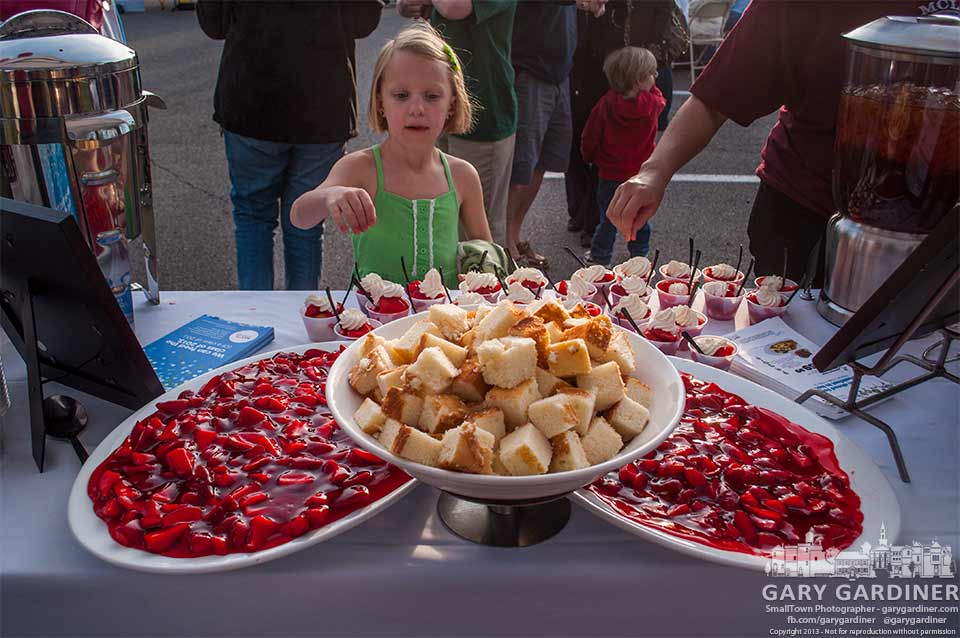
If I were on assignment to cover Fourth Friday for a publication there would be a shoot list of photos to match the editorial idea for the story. The list details the subject of the story with a suggestion of the photos required. If the story were about dancers both these photos would have been good as feature photos. If it had been about the food vendors neither would have worked. Not that the food vendors couldn’t have a standalone photo. The girl reaching for a sample of strawberry shortcake is a good feature photo for that purpose.

Youngster sampling strawberry shortcake at food vendors booth at Fourth Friday
I didn’t shoot every possible event for the night. The cool weather perhaps kept some people at home because the crowd was smaller than normal so there isn’t a crowd photo. I didn’t shoot any of the musical groups. I didn’t shoot people working in the booths.
Those will probably be in the next set of photos on the next Fourth Friday. For this one you’ll have to be satisfied with my standalone feature photos. I was.